
Skate

description
Skates have been used for travel, fishing and pleasure from the Bronze Age through to today.
This worked bone skate has been manufactured from a horse metatarsal, a bone commonly used to make skates, as were the metapodials of cattle and, more rarely, deer leg bones. Although these objects are most commonly recognised as skates, other uses proposed include tools to smooth textiles or worked leather.
The skate was recovered alongside mid 12th-13th century pottery and a similar date can be considered for it. The anterior (front) side of the metatarsal has been smoothed flat, from contact with the ice, and the posterior (back) side shows polish along the medial ridge where the foot has worn the surface. The distal end has been removed and rounded over and there has been some trimming to both the heel and toe to create a slight upswept profile that likely improved performance.
It is noticeable that this example has no strap-holes to attach the skate to the foot. This is not uncommon, because it was not essential for bone skates to be tied to the feet, since the method of skating differed from that seen today, with propulsion being achieved with the use of a pole.
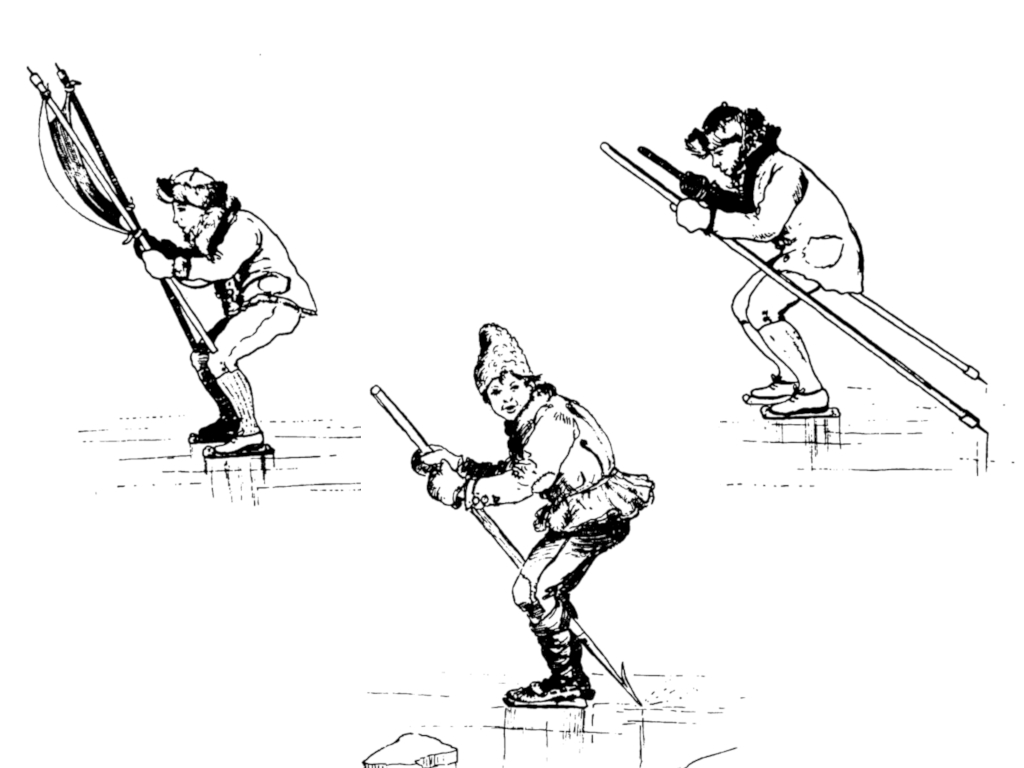
A vivid account of skating on the frozen marsh at Moorfields, London, was recorded by William FitzStephen in 1173 in his Life of Saint Thomas of Canterbury:
‘Others, more skilled at winter sports, put on their feet the shin-bones of animals…and, holding poles shod with iron in their hands, which they strike from time to time against the ice, they are propelled swift as a bird in flight or a bolt shot from an engine of war…’
FitzStephen also describes how dangerous skating could be:
‘Often a leg or an arm is broken, if the victim falls with it underneath him; but theirs is an age greedy for glory, youth yearns for victory and exercises itself in mock combats in order to carry itself more bravely in real battles.’
Other information & metadata
Site location: Avonmouth, South Gloucestershire
Project type: Archaeological evaluation
Site type: Multiperiod
Discovery context: Pit
Find reference: Bristol Museum & Art Gallery, BRSMG:2023/32
Collection
Artefact type
Period
Material
Location
Dimensions
Length: 238mm
Width: 30mm
Depth: 28mm
More artefacts

Double-ended Implement

Strap End

Linen Smoother

Intaglio Ring

Sub-Biconical Jar

Collared Urn

Polished Axe

Manufacturing Waste

Kiln Furniture

Beer Bottles

Clasp-Knife Handle

Toiletry Set

Brodie Helmet

Disc scraper

Buttons

Quernstone

Socketed axeheads

Scoreboard

Monkey

Cockerel figurine

Dominoes

Thimble

Bone Ring

Naval button

Buttons

Buckle

Plain Bowl

Cross Pendant

Pinecone-headed Pin

Fern Impressed Pottery

Leather Shoes

Dice

Clay Pipes

Buckle

Beaker Cup

Strap Hook

Crucible

Buckle and plate

Flint handaxe

Flute

Chape

Seal Matrix Mould

Palstave

Knife Sheath

Kingston-type Aquamanile

Coin Hoard

Urns

Zoomorphic Brooch

Ring

Mount

Spearhead

Samian Bowl

Glass Cameo

Jug

Timber Lined Well

Beads

Seal Matrix

Denarius

Armchair Voussoir

Roman Tiles

Aucissa Brooch

Nauheim Derivative Brooch

Spindle Whorl

Polden Hill Brooch

Continental Plate Brooch

Cockerel Figurine

Two-handled mug

Colchester Derivative Brooch

Jug

Rotary Quern

Hod Hill Brooch

T-spacer

Token Mould

Plate Brooch

Spatula

Penannular Bracelet

Beaker

Harness Pendant

Phalera and Pendant

Axehead

Furniture

Knife Sheath

Knife Handle

Lock and Key

Candle Holder

Drahtifibel Derivative Brooch

Buckle Plate

Buzz Bone

Doll

Laverstock Aquamanile

Pin

Palaeofaeces

Weights

Plate Brooch

Whetstone

Ham Green Pottery

Baggy Jar

Leather Shoes

Saponified Fat
